Leave Your Message

Top 10 Stainless Steel Gasket Suppliers Worldwide

Stainless Steel Gasket suppliers now serve demanding industries, including chemical processing, power generation, food production, and offshore engineering. These applications need more than corrosion resistance. They require controlled compression, accurate dimensions, stable materials, and reliable traceability. A small spiral-wound gasket may sit between two steel flanges, yet its failure can stop an entire production line.

Recent reports from Grand View Research and MarketsandMarkets describe steady growth across the global gasket and industrial sealing sectors. Their findings connect this growth with stricter emission controls, expanding process equipment, and replacement demand from aging infrastructure. Stainless steel remains important because it can tolerate heat, pressure, vibration, and aggressive media when properly specified. However, material grade alone does not guarantee performance.

John H. Bickford, a widely recognized authority on gasketed joints, wrote in Gaskets and Gasketed Joints, “A gasket is a deformable material placed between two surfaces.” That simple definition still matters. Installation quality, flange condition, bolt loading, and operating temperature can change the result dramatically. This article examines the Top 10 Stainless Steel Gasket Suppliers Worldwide through practical criteria, including manufacturing capability, certifications, product range, testing, delivery coverage, and technical support. The ranking is not perfect. Supplier strengths vary by region, application, and purchasing volume. Some companies excel in custom metal seals, while others perform better in standard industrial sizes. Readers should verify current certificates, pressure ratings, lead times, and compatibility before making a final decision.
Top 10 Stainless Steel Gasket Suppliers Worldwide

Global Standards for Stainless Steel Gasket Manufacturing

Top 10 Stainless Steel Gasket Suppliers Worldwide

Global standards shape how stainless steel gaskets are designed, tested, and documented. Reliable suppliers usually align product dimensions with ASME B16.20 or relevant EN standards. Material selection may follow specifications such as ASTM A240 for stainless steel plate. These references help control chemical composition, thickness, and mechanical performance.

Manufacturing quality depends on more than a certificate. Experienced plants verify incoming metal with positive material identification. They inspect cutting edges, sealing surfaces, and finished dimensions. Critical gaskets may receive hardness checks, surface-finish measurements, and batch-level traceability. Each package should identify the alloy grade, production lot, applicable standard, and inspection results. This evidence supports safer purchasing decisions across different regions.

No standard covers every service condition. That gap deserves attention. A gasket for steam service may need different testing from one used with corrosive chemicals. Suppliers should review pressure, temperature, flange type, bolt loading, and media compatibility before production. Some catalogs appear precise, but tolerances can vary between regional systems. This is where technical review matters. In practice, documentation can still lag behind manufacturing quality. Buyers should question unclear test reports and request samples when joint performance is critical. A dependable supplier treats compliance as a working process, not a printed claim.

Key Materials and Designs Used by Leading Gasket Suppliers

Leading stainless steel gasket suppliers begin with material selection, not catalog appearance. Grade 304 suits many general industrial services, while 316L offers stronger resistance to chlorides and coastal moisture. For elevated temperatures, 321 and 347 can provide better stability after repeated heating cycles. Material certificates, hardness checks, and surface inspections should support every serious order. Details matter.

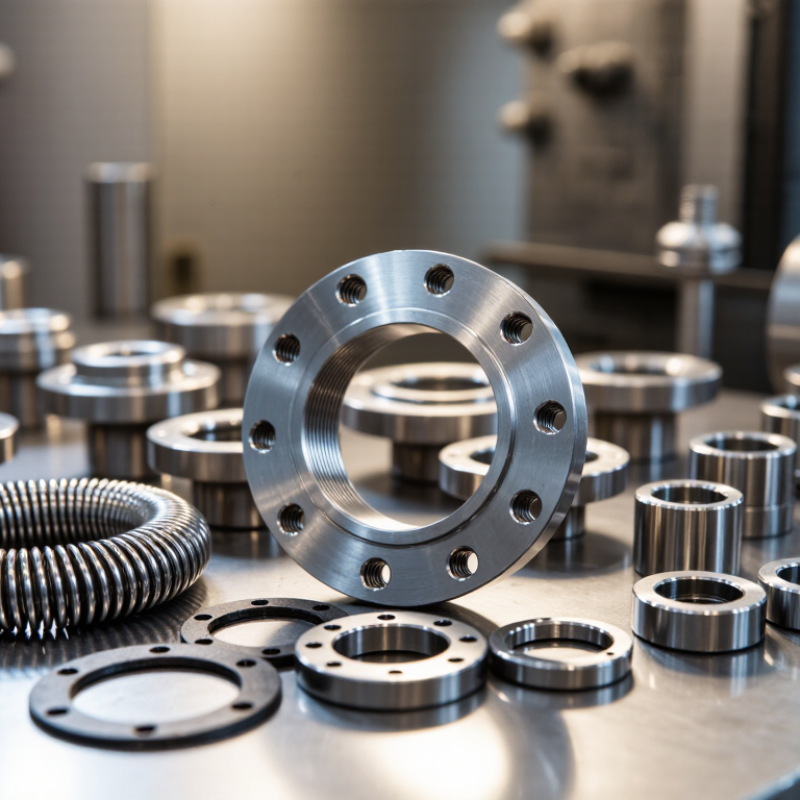
Design determines how that material performs. Spiral wound gaskets combine stainless steel winding strips with graphite, PTFE, or other fillers. They suit flanged connections that face pressure and temperature changes. Metal-jacketed gaskets use a soft inner filler protected by a formed metal shell. They work well around heat exchangers and uneven flange surfaces. Ring-type joints require accurate machining and controlled installation. Serrated metal gaskets can improve sealing when compression space is limited. Each design has limits.

In practical quality checks, technicians examine thickness, winding density, filler continuity, and dimensional tolerance. A gasket may look precise yet fail because the flange is scratched or poorly aligned. Not every seal needs the most expensive alloy. A cheaper grade can become a costly choice in saltwater service. Conversely, excessive material selection may add cost without improving safety. This is where supplier expertise matters: recommendations should reflect pressure, temperature, media, bolt load, and maintenance history. Fit still decides performance. Even experienced teams sometimes overlook storage humidity or reuse a compressed gasket. That deserves review.

How to Evaluate Stainless Steel Gasket Suppliers Worldwide

Evaluating stainless steel gasket suppliers requires more than comparing prices. Start with material control. Ask for heat numbers, mill certificates, and positive material identification records. These documents should match the gasket material and production batch. A reliable supplier explains whether it uses 304, 316L, or another specified grade. It should also discuss graphite fillers, winding materials, and temperature limits clearly. Vague answers are warning signs.

Review manufacturing accuracy through samples and inspection data. Check inner diameter, outer diameter, thickness, and compression performance. For spiral-wound gaskets, examine winding density and centering. For metal-jacketed designs, inspect weld quality and surface finish. Ask how the supplier handles flange irregularities and pressure changes. Test reports should identify methods, equipment, dates, and acceptance criteria. Independent laboratory verification adds credibility, especially for critical applications. However, paperwork alone cannot prove production consistency.

Visit the facility when possible. Observe storage conditions, labeling, and batch segregation. Moisture, dust, and mixed alloys can create avoidable failures. Request customer references from similar industries, not only general testimonials. Check delivery history, corrective-action records, and technical response time. A supplier may offer attractive prices but weak engineering support. That trade-off is easy to miss. My own evaluation criteria would need regular review, because service quality can change after a contract begins. Clear drawings, signed specifications, and sample approval reduce that risk.

Top 10 Stainless Steel Gasket Suppliers Worldwide - How to Evaluate Stainless Steel Gasket Suppliers Worldwide

Anonymous supplier benchmark based on commonly used technical, quality, compliance, manufacturing, and service criteria. No company or brand names are included.

Rank Anonymous Supplier Profile Typical Product Coverage Relevant Stainless Steel Grades Applicable Standards to Request Recommended Quality Evidence Best-Fit Applications Key Evaluation Focus
1 Global Full-Service Manufacturer Spiral wound Metal jacketed Ring-type joint Flat metal 304/304L, 316/316L, 321, 347, and alloy options subject to specification ASME B16.20, ASME B16.21, EN 1514, EN 12560, and project-specific requirements ISO 9001 certificate, material test reports, dimensional inspection records, and batch traceability Refineries, chemical plants, power generation, and large industrial projects Production capacity, engineering support, export documentation, and consistency across batches
2 High-Temperature and High-Pressure Specialist Spiral wound Kammprofile RTJ 316L, 321, 347, nickel alloys, and other grades selected for temperature and corrosion service ASME B16.20, API 6A where applicable, EN 12560, and engineering design specifications Pressure-class documentation, winding-density data, PMI records, and controlled manufacturing procedures Steam systems, thermal processing, petrochemical service, and high-pressure equipment Temperature limits, pressure rating, compression behavior, and material compatibility
3 Chemical and Corrosive-Service Supplier PTFE-faced Metallic Graphite-based Envelope 316/316L, 904L, duplex grades, and other corrosion-resistant materials when technically justified EN 1514, ASME B16.21, ASTM material specifications, and chemical-resistance requirements PMI reports, chemical compatibility data, surface-finish records, and lot traceability Acid handling, chemical processing, water treatment, and corrosive media Media compatibility, chloride resistance, leakage prevention, and product cleanliness
4 Precision Custom-Gasket Manufacturer CNC-cut Laser-cut Custom profiles Small batches 304L, 316L, 321, and customer-specified stainless steel sheet or foil grades Drawing-specific tolerances, ASME B16.21, EN 1514, and customer inspection standards Approved drawings, first-article inspection, dimensional reports, and revision control OEM equipment, maintenance parts, unusual flange geometries, and replacement components Dimensional accuracy, drawing interpretation, prototype capability, and change management
5 Large-Diameter Flange-Gasket Supplier Large flat gaskets Spiral wound Heat-exchanger gaskets 304L, 316L, 321, and stainless steel grades specified for large-diameter service ASME B16.21, EN 1514, EN 12560, and project-specific flange standards Roundness checks, dimensional inspection, handling procedures, and packaging controls Large pipelines, tanks, heat exchangers, and process plant maintenance Flatness, concentricity, shipping protection, storage life, and installation guidance
6 Food, Pharmaceutical, and Hygienic-Service Supplier Sanitary seals Metal gaskets PTFE-lined designs 316L is commonly specified for wetted stainless steel components; grade must match the process environment ASME BPE where applicable, hygienic design requirements, surface-finish specifications, and customer validation protocols Material certificates, surface-finish reports, cleaning records, and contamination-control procedures Food processing, beverage systems, biotechnology, and pharmaceutical equipment Cleanability, surface finish, dead-leg reduction, contamination control, and documentation
7 Energy and Utility Maintenance Supplier Standard flange gaskets Boiler gaskets Valve and pump seals 304/304L, 316/316L, 321, and stainless steel winding or jacket materials matched to service conditions ASME B16.20, ASME B16.21, EN 1514, and applicable utility specifications Certificate of conformity, stock identification, batch records, and inspection sampling plans Power plants, district energy, water utilities, and general industrial maintenance Stock availability, interchangeability, emergency response, and correct pressure-class selection
8 Export-Oriented Project Supplier Standard sizes Project kits Multi-country shipping Common austenitic stainless steel grades plus project-specific materials listed in the purchase specification ASME, EN, ASTM, DIN, JIS, or other standards required by the destination project Commercial invoice, packing list, certificate of origin, material certificates, and inspection dossier International EPC projects, plant construction, and multi-location procurement Documentation accuracy, packaging, Incoterms, customs support, and delivery reliability
9 Rapid-Response Stocking Supplier Standard sizes Maintenance kits Replacement gaskets Frequently stocked 304/304L and 316/316L products; special grades normally require confirmation ASME B16.20, ASME B16.21, EN 1514, and purchaser-approved dimensional standards Live inventory confirmation, batch identification, certificate availability, and storage controls Planned shutdowns, urgent repairs, MRO procurement, and spare-parts management Actual inventory, order accuracy, dispatch time, shelf-life control, and return policy
10 Value-Focused Regional Manufacturer Flat gaskets Basic spiral wound Standard dimensions Common 304/304L and 316/316L grades, subject to material availability and purchase requirements Relevant ASME or EN dimensional standards, customer drawings, and agreed inspection criteria Certificate of conformity, sample inspection, material documentation, and clear warranty terms General industrial service, standard piping, workshops, and recurring local demand Total landed cost, minimum order quantity, repeatability, technical communication, and after-sales support

Important evaluation note: Standards and material grades should be selected according to pressure, temperature, fluid compatibility, flange design, and applicable regulations. Before placing an order, request current certificates, material test reports, dimensional drawings, traceability records, and written confirmation of the exact product specification.

Top 10 Stainless Steel Gasket Suppliers by Industry Coverage

Top 10 Stainless Steel Gasket Suppliers Worldwide

Top 10 Stainless Steel Gasket Suppliers by Industry Coverage

Industry coverage reveals more than a supplier’s catalog size. Different plants require different gasket designs, alloys, pressure ratings, and surface finishes. Oil and gas facilities often demand spiral-wound or metal-jacketed solutions for flanged connections. Chemical processors may need corrosion-resistant grades and reliable performance under temperature changes. Food and pharmaceutical facilities usually prioritize cleanable surfaces, low contamination risk, and documented material traceability.

Power stations, marine systems, water treatment plants, and semiconductor lines add different demands. This range tests a supplier’s engineering depth. Strong suppliers can interpret drawings, recommend suitable stainless steel grades, and support custom dimensions without delaying production. They should also provide inspection records, batch identification, dimensional reports, and pressure-test data when required. Practical support matters.

Not every supplier serves every industry equally well. A broad website may hide limited production experience. That is worth questioning. Buyers should compare technical staff, tooling capacity, quality controls, and regional service before choosing a supplier. Site audits can reveal useful details, such as clean storage areas, calibrated measuring equipment, and clear packaging procedures. One overlooked issue remains common: gasket selection often focuses on material alone. Flange condition, bolt loading, media concentration, and installation practice can matter just as much.

Quality Control, Certifications, and Export Capabilities of Suppliers

Top 10 Stainless Steel Gasket Suppliers Worldwide

Quality Control, Certifications, and Export Capabilities of Suppliers

The International Stainless Steel Forum reported 58.4 million metric tonnes of stainless steel production in 2023. This scale increases buyer choice, but supplier quality can vary sharply. Reliable gasket suppliers should show batch-level traceability, material heat numbers, dimensional records, and controlled sealing tests. ISO 9001 certification supports documented quality systems, yet it does not prove every gasket will perform correctly. That distinction matters.

The ISO Survey 2023 recorded more than 1.2 million ISO 9001 certificates worldwide. Buyers should still request current certificates, audit scopes, and manufacturing addresses. For stainless steel grades, EN 10204 type 3.1 material certificates provide useful chemical and mechanical evidence. ASME B16.20 dimensions may support industrial flange applications, while ASTM F37 testing can help verify leakage performance. Certificates alone are not enough.

Export capability needs practical proof. Strong suppliers provide moisture-resistant packaging, clear markings, commercial invoices, packing lists, and origin documents. They should explain Incoterms, lead times, inspection procedures, and replacement handling before accepting an order. Export data can look impressive. However, shipping volume does not confirm technical consistency. I would inspect sample gaskets, measure inner and outer diameters, and compare test reports with the actual heat number. Small gaps in documentation are easy to overlook. That is where my own review process still needs improvement.