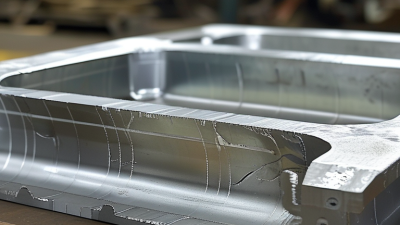
Choosing the right Stamped Sheet Metal supplier affects cost, quality, delivery, and long-term production stability. The decision requires more than comparing hourly rates or reviewing attractive facility photos. A reliable evaluation examines tooling capability, material control, process discipline, engineering support, and realistic production capacity.
The global metal stamping market continues to expand. Grand View Research reported that the market was valued at approximately USD 211 billion in 2023, with continued growth expected through 2030. This growth increases supplier choice, but it also increases selection risk. A capable supplier should explain its press range, die maintenance schedule, tolerance controls, and inspection equipment clearly. Ask for evidence, not promises. ISO 9001 certification can support process consistency, while IATF 16949 may be relevant for automotive programs. However, certification alone does not guarantee good parts.
Details matter.
A practical review should include material certificates, first-article inspection records, PPAP experience, and traceability procedures. Request sample parts with visible edges, formed corners, holes, and critical dimensions. Check burr height, flatness, surface protection, and repeatability across batches. The Reshoring Initiative’s annual data reports continue to emphasize supply-chain resilience and domestic production decisions, making geographic risk worth reviewing. Freight distance, backup tooling, and contingency planning can influence total cost more than the initial quotation. No supplier scorecard is perfect. A spreadsheet can hide communication problems, delayed engineering feedback, or weak die repair support. A plant visit, technical interview, and small pilot order often reveal more. The best supplier is not always the cheapest. It is the partner that can repeatedly deliver compliant parts without creating avoidable surprises.
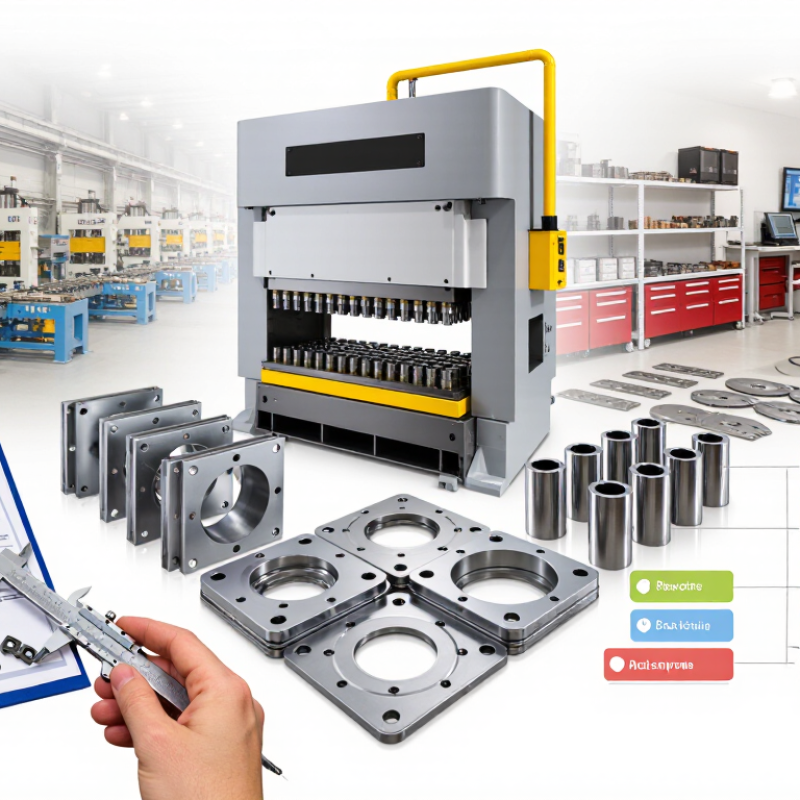
Begin with the part, not the supplier’s machine list. Record the material grade, sheet thickness, blank size, annual volume, and delivery schedule. Add critical dimensions, bend locations, hole sizes, burr limits, and surface expectations. A drawing alone may hide production risks.
Material planning matters. The World Steel Association reported 1.89 billion tonnes of crude steel production worldwide in 2023. That scale does not guarantee stable sheet quality. Ask for mill certificates, material traceability, and incoming inspection records. Confirm whether the supplier controls coil direction and thickness variation. Small differences can change springback.
Be specific about tolerance. ISO 286-1 can guide general dimensional thinking, but stamped parts often need process-based limits. Request a capability study for critical features. The ISO Survey 2022 recorded more than 1.2 million ISO 9001 certificates globally, yet certification alone proves little about one tool or process. Ask for sample inspection reports, gauge methods, and corrective-action records.
Define success in measurable terms. Specify acceptable scratches, plating thickness, flatness, and packaging protection. Include a pilot run before full production. It may feel slower. It can expose a weak design early. I have seen teams overfocus on unit price and overlook tool maintenance, press capacity, and realistic scrap rates. That mistake is expensive. Your requirement sheet should also state what remains uncertain, because unclear assumptions often become rejected parts.

Choosing the right stamped sheet metal supplier requires more than reviewing a capability brochure. A practical assessment begins with the production floor. Ask to see current work, not only finished samples. The press room reveals useful details. Check press tonnage, bed size, stroke rate, and feeder accuracy. Small gaps matter.
Review die-making and maintenance practices closely. A capable supplier should explain how dies are designed, tested, repaired, and stored. Look for progressive, transfer, or single-operation presses suited to your part geometry and material thickness. Inspect tooling records and replacement schedules.
I have seen attractive samples produced on worn dies. They failed later. That failure was avoidable.
Reliable quality depends on measurement and process control. Confirm that the supplier uses calibrated gauges, optical inspection, or coordinate measuring equipment when tolerances require them. Ask how operators control burrs, springback, flatness, and surface marks during production. Traceability should connect material certificates, coil numbers, inspection reports, and shipment records. Discuss capacity honestly, including overtime limits and backup equipment. A supplier may promise high volume while relying on one aging press. That answer is more useful than confidence alone. Request a small pilot run, then compare actual cycle times, dimensional results, and tooling adjustments against the proposed plan. Mistakes can happen during setup; the supplier’s response shows its real level of experience.
Choosing the right stamped sheet metal supplier starts with material verification. A polished sample can hide weak controls. In supplier audits, I request certificates linked to specific heat or lot numbers. Each certificate should show the material grade, thickness, temper, and test results. I compare these details with incoming inspection records and production labels. Traceability matters. A small mismatch can signal a serious weakness.
Certifications should match the supplier’s actual processes and production scope. Do not accept a certificate image alone. Check its validity, covered locations, and issuing organization through current records. Ask how often internal audits occur, and request evidence of corrective actions. Calibration records for micrometers, gauges, and testing equipment also deserve attention. These details often reveal whether quality is measured or merely promised.
Process controls show how the supplier works every day. Request control plans, first-article inspection reports, statistical data, maintenance logs, and nonconformance records. During a site visit, observe coil identification, die setup, lubrication, burr inspection, and packaging. Ask how operators contain defects and prevent repeat problems. Open answers are valuable. I have sometimes trusted clean paperwork too quickly. Production reality can differ, especially during rushed orders. A supplier’s willingness to discuss those gaps may be more reliable than polished claims.
Practical supplier-screening matrix for stamped sheet metal projects. Request objective evidence for every item before supplier approval.
| Evaluation Area | Verification Dimension | Recommended Acceptance Criteria | Evidence to Request | Risk if Not Verified | Assessment |
|---|---|---|---|---|---|
| Material Quality | Material grade and specification | Material grade, thickness, temper, and coating must match the approved drawing and purchase order. | Material test certificate, heat or batch number, supplier certificate of conformity, and receiving inspection record. | Incorrect strength, formability, corrosion resistance, or dimensional performance. | Mandatory |
| Material Quality | Thickness control | Measured thickness must remain within the tolerance specified by the applicable material standard or drawing. | Calibrated micrometer readings, incoming inspection report, and sampling plan. | Part fit problems, excess weight, cracking, or insufficient structural strength. | Mandatory |
| Material Quality | Surface condition | No unacceptable rust, dents, scratches, laminations, edge damage, oil contamination, or coating defects. | Incoming visual inspection criteria, defect photographs, surface acceptance standard, and traceable inspection records. | Visible defects, premature corrosion, coating failure, or customer rejection. | Mandatory |
| Material Quality | Material traceability | Each production lot must be traceable from finished part back to the original material heat or batch. | Lot labels, traveler or routing records, barcode records, and retained material certificates. | Unable to isolate affected parts during a quality incident or recall. | Mandatory |
| Certifications | Quality management system | A current third-party quality-management certificate appropriate to the product and customer requirements. | Valid certificate, certificate scope, expiry date, issuing body, and latest surveillance or recertification status. | Inconsistent quality practices and limited evidence of corrective-action control. | Verify Validity |
| Certifications | Environmental and compliance declarations | Material and finishing processes must meet applicable restricted-substance and environmental requirements. | Supplier declarations, restricted-substance test reports, coating declarations, and customer-specific compliance forms. | Regulatory nonconformance, shipment delays, or market-access restrictions. | Project Dependent |
| Certifications | Special-process approval | Plating, painting, heat treatment, welding, or other special processes must be approved when specified by the drawing or contract. | Process qualification records, approved subcontractor list, test reports, and operator or process certifications. | Uncontrolled coating thickness, weak joints, poor durability, or functional failure. | When Applicable |
| Process Controls | Tooling and die maintenance | Progressive, transfer, or compound dies must have documented preventive-maintenance intervals and repair history. | Die maintenance schedule, inspection checklist, tool-life records, and corrective-maintenance history. | Burr growth, dimensional drift, premature tool failure, and unplanned downtime. | Mandatory |
| Process Controls | First-article inspection | First-off parts must be inspected and approved before the production run continues. | First-article report, ballooned drawing, dimensional results, material confirmation, and approval signature. | Large quantities of nonconforming parts produced before detection. | Mandatory |
| Process Controls | In-process inspection | Critical dimensions and functional characteristics must be checked at defined production intervals. | Control plan, inspection frequency, check sheets, gauge records, and reaction plan for out-of-control results. | Process drift remains undetected until final inspection or customer use. | Mandatory |
| Process Controls | Measurement-system control | Gauges and measurement equipment must be calibrated and suitable for the required tolerance. | Calibration certificates, gauge identification list, calibration interval, and measurement-system analysis where required. | False acceptance or rejection caused by unreliable measurement results. | Mandatory |
| Process Controls | Statistical process control | Critical characteristics should demonstrate stable process performance using control charts or capability studies. | Process capability reports, control charts, defined control limits, and corrective-action records. | Unstable dimensions, excessive scrap, and recurring customer complaints. | For Critical Features |
| Quality Results | Nonconformance management | Nonconforming material must be identified, segregated, dispositioned, and prevented from unintended shipment. | Nonconformance reports, containment records, rework instructions, and disposition approvals. | Defective parts mixed with conforming parts or shipped to the customer. | Mandatory |
| Quality Results | Corrective and preventive action | Recurring defects should receive documented root-cause analysis and effectiveness verification. | Corrective-action reports using a recognized root-cause method, implementation evidence, and follow-up results. | Repeated defects, temporary fixes, and rising inspection or warranty costs. | Mandatory |
| Delivery Readiness | Production capacity and contingency planning | Available press capacity, staffing, tooling capability, and backup plans must support the forecasted demand. | Capacity review, equipment list, approved backup processes, production loading plan, and recovery procedure. | Late deliveries, unplanned subcontracting, or inconsistent process results. | Forecast Dependent |
| Final Approval | Supplier audit and sample validation | Approve the supplier only after document review, site or remote audit, and production-representative sample validation. | Completed audit checklist, signed sample approval, capability results, open-action list, and final approval record. | Supplier appears compliant on paper but cannot consistently produce conforming parts. | Required Before Release |
Note: Acceptance criteria should be aligned with the applicable drawing, material standard, customer specification, regulatory requirement, and intended service environment.
Choosing a stamped sheet metal supplier requires more than comparing the lowest quotation. Break out the price by material, tooling, setup, finishing, inspection, packaging, and freight. The World Bank’s April 2024 Commodity Markets Outlook projected a 4% decline in global commodity prices during 2024. However, steel prices vary by region, grade, and purchasing volume. Ask suppliers how long their quoted material price remains valid. A low quote may expire before production starts.
Lead time deserves equal attention. The October 2024 Manufacturing ISM Report on Business recorded a Supplier Deliveries Index of 52.0, indicating slower deliveries in the manufacturing sector. Request separate dates for engineering review, tooling, first-article inspection, and full production. Confirm the supplier’s capacity during peak periods. “Fast” is not a measurable promise. A written schedule is better. Still, forecasts can fail when material allocations or machine maintenance change.
Order flexibility can protect cash flow. Compare minimum order quantities, split-shipment options, design-change fees, and storage policies. A supplier accepting 500-piece releases from a 5,000-piece contract may reduce inventory pressure, even with a slightly higher unit price. The 2024 Deloitte Global Chief Procurement Officer Survey reported that procurement leaders continue to prioritize resilience and supplier collaboration. Treat that as direction, not proof. Ask for real examples, such as handling a 20% volume increase or a revised hole pattern. Do not overlook small details. A capable supplier should explain its assumptions clearly, document exceptions, and admit where its process has limits.
Choosing the right stamped sheet metal supplier requires more than comparing unit prices. Communication often reveals the real working relationship. Ask how quickly the team answers technical questions and reports production changes. A capable supplier should explain tolerances, material options, tooling limits, and inspection methods clearly. Request a sample drawing review before placing a large order. Listen for specific questions, not polished promises. Ask for evidence.
Reliability appears in ordinary details. Can the supplier repeat a delivery date across the quotation and production schedule? Request a realistic lead time covering material purchasing, tooling, forming, deburring, and final inspection. You should receive measurable updates, such as first-article results and dimensional inspection records. During a factory review, look for labeled work orders, controlled drawings, calibrated gauges, and protected finished parts. Details matter. These signs cannot guarantee perfection. In practice, attractive samples sometimes hide weak process control.
Long-term support matters after the first shipment. Discuss engineering changes, replacement tooling, recurring quality issues, and urgent communication before signing. A dependable partner keeps revision histories and responds with corrective actions, not vague excuses. Set a review rhythm, perhaps monthly for new programs and quarterly after stabilization. Do not ignore small warning signs. A late reply today may become an unanswered quality problem later. My own evaluation is not always perfect. I once focused too heavily on price and underestimated support time. That mistake still shapes how I compare suppliers.