How to Choose the Right Double Lip Oil Seal for Your Needs?
Choosing the right Double Lip Oil Seal is crucial for various applications. According to John Smith, a sealing industry expert, "The right seal can prolong the life of your machinery." This highlights the importance of making an informed choice.
Double Lip Oil Seals offer superior protection against leakage. Their design includes two lips, providing enhanced sealing performance. However, selecting the wrong size or material can lead to failures. Understanding your specific needs is vital in this process.
It’s easy to overlook details such as operating temperature and pressure. These factors significantly impact seal performance. Even seasoned professionals can miscalculate these aspects, leading to costly mistakes. Being aware of your environment, and the limitations of different materials, is essential for effective sealing solutions.
Understanding the Functionality of Double Lip Oil Seals
Double lip oil seals play a crucial role in various mechanical systems. They help prevent leakage of lubricants while keeping contaminants out. A recent industry report indicates that double lip seals can reduce wear and tear on machinery by up to 30%. This efficiency directly translates to longer equipment life and reduced maintenance costs.
Understanding the functionality of these seals is essential. Designed with two independent sealing lips, they create a reliable barrier. This design allows for effective sealing even in high-pressure conditions. According to a study by the Fluid Power Journal, improper seal selection can lead to premature failure in hydraulic systems. Failures often occur due to inadequate material choice or incorrect sizing.
Commonly used materials include rubber and silicone, each suited for different environments. However, the wrong choice can lead to performance issues. Some seals may degrade quickly under extreme temperatures. This limits their effectiveness and lifespan. Thus, regularly assessing seal performance in challenging conditions is vital. Selecting the right seal is not just about current needs; it also prepares your system for future challenges.
Factors to Consider When Choosing Double Lip Oil Seals
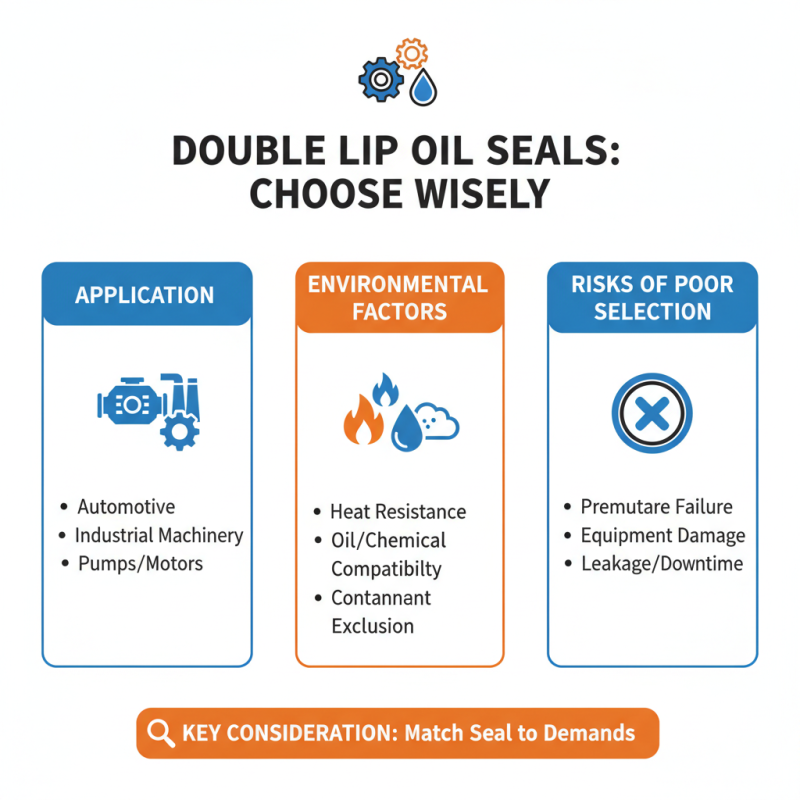
Choosing the right double lip oil seal is crucial for various applications. Many factors come into play. One major consideration is the operating environment. Temperature and pressure levels can significantly impact seal performance. It’s important to know the specific conditions in which the seal will operate. This knowledge can help ensure longevity and efficiency.
Another factor to ponder is material selection. Different materials provide varying levels of resistance to oil, heat, and abrasion. Some materials handle extreme temperatures better than others. Properly assessing the compatibility of materials with the fluids they'll encounter is key. A mismatched seal can lead to premature failure, causing operational issues.
The installation method is often overlooked but can make a difference. How the seal is installed affects its effectiveness. Misalignments during installation may cause leakage. This may lead to a cycle of repairs and maintenance. Consider not just the seal itself but also the process of putting it in place. Choosing the right double lip oil seal is both an art and a science.
Factors to Consider When Choosing Double Lip Oil Seals
Materials and Design Options for Double Lip Oil Seals
When selecting the right double lip oil seal, understanding materials is crucial. Common materials include rubber, silicone, and thermoplastic elastomers. Each material has its advantages. Rubber offers good flexibility, while silicone withstands higher temperatures. Thermoplastic elastomers provide a balance between durability and flexibility.
Design options also play a significant role in seal performance. Double lip designs can enhance protection against contaminants. The spacing between lips can influence sealing efficiency. Narrow spaces may provide better sealing but can also be prone to wear. In contrast, wider spaces enhance durability, but they might allow more leakage. Don’t forget the importance of proper installation. An improper fit can lead to rapid failure, regardless of material or design.
Reflecting on the choice can be challenging. Evaluating the operating conditions and potential exposure to chemicals is essential. Consider your specific application carefully. Think about the lubrication type used. It’s worth exploring different configurations for enhanced performance. Each decision can impact longevity and overall effectiveness.
How to Choose the Right Double Lip Oil Seal for Your Needs? - Materials and Design Options for Double Lip Oil Seals
| Seal Type |
Material |
Application |
Temperature Range (°C) |
Pressure Range (MPa) |
| Double Lip Nitrile Seal |
Nitrile Rubber (NBR) |
Automotive Applications |
-30 to 100 |
0 to 1 |
| Double Lip Fluoroelastomer Seal |
Fluoroelastomer (FKM) |
Chemical Processing |
-20 to 200 |
0 to 1.5 |
| Double Lip Silicone Seal |
Silicone Rubber |
Food & Beverage |
-50 to 200 |
0 to 0.5 |
| Double Lip Polyurethane Seal |
Polyurethane (PU) |
Heavy Machinery |
-30 to 100 |
0 to 2 |
Application-Specific Considerations for Double Lip Oil Seals
When choosing a double lip oil seal, consider the specific application. Different environments demand varying levels of resistance to heat, oil, and contaminants. For instance, seals in automotive applications must handle high temperatures and abrasive conditions. A poor selection can lead to premature failure.
The size and fit of the seal are crucial. An ill-fitting seal is often prone to leaks, losing lubricant and damaging components. Pay attention to the shaft diameter and housing dimensions. Another factor is the material. Some applications may require rubber compounds tailored to resist specific chemicals. Evaluate your environment carefully before making a decision.
Finally, consider installation challenges. Sometimes, a seal may appear perfect but can be tricky to install. If not installed correctly, a seal can become damaged even before use. This aspect often deserves more attention in the selection process. Choosing the right double lip oil seal requires thorough analysis and reflection on practical application needs.
Maintenance and Replacement Guidelines for Double Lip Oil Seals
When using double lip oil seals, maintenance is crucial. Regular checks help identify wear or damage early. The lips of the seal should be free of debris. Any dirt can lead to leaks, causing more significant damage. Keeping the surrounding area clean prolongs the seal's life. It’s necessary to inspect the installation condition. Misalignment can result in premature failure.
Replacement should not be overlooked. When a seal shows signs of wear, replacing it immediately is crucial. Look for cracks or deformation in the material. Small issues may lead to bigger problems later. Use the correct tools to avoid further damage. In some cases, improper removal can damage housing, leading to costly repairs.
Documentation of maintenance and replacement steps is beneficial. Reflect on what has worked in the past and what hasn’t. Gathering this information will help in future decisions. It's essential to weigh costs versus benefits. Sometimes, opting for a less expensive seal can result in higher long-term expenses.