How to Choose the Best High Temp Gasket Sealant?
Choosing the right High Temp Gasket Sealant can be challenging. Many options are available, and each serves a specific purpose. High temperatures can degrade materials, leading to leaks and failures. Therefore, understanding your needs is crucial.
When selecting a sealant, consider the temperature range and environment. Not all sealants are created equal. Some are better suited for extreme heat. Others may not hold up under prolonged exposure. There's much to reflect on here.
It's important to test different products. A sealant that works for one application may not work for another. This can lead to frustrating failures. Taking the time to choose wisely can prevent these issues. Ultimately, the choice you make can significantly impact your project's success.
Understanding High Temp Gasket Sealants: Key Features and Functions
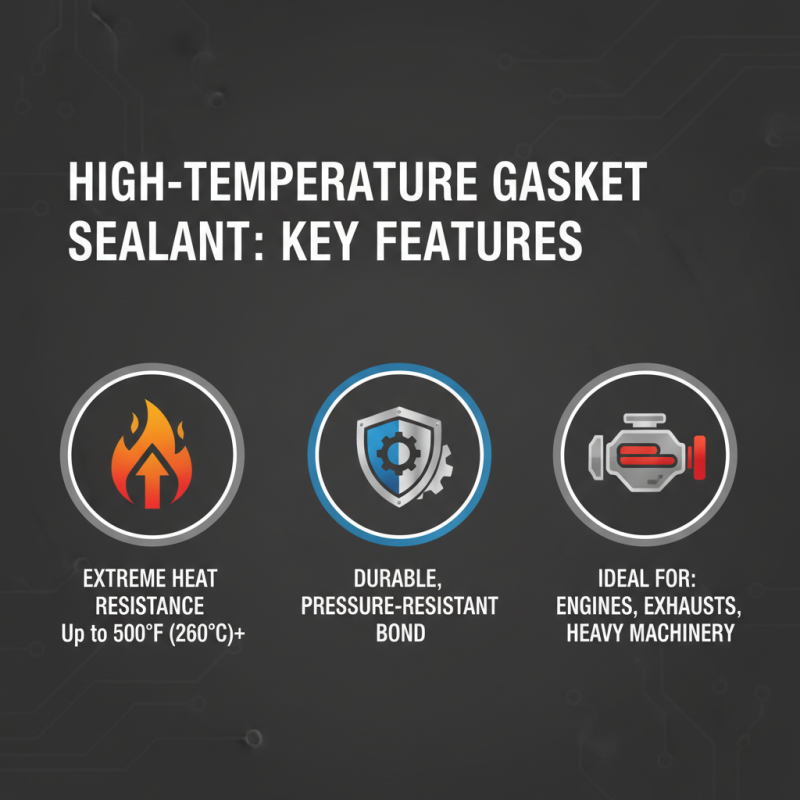
When selecting a high-temperature gasket sealant, understanding its key features is vital. High-temp sealants can withstand extreme heat, often exceeding 500°F (260°C). They are designed to form a durable bond that remains intact under pressure. This is crucial for applications in engines, exhaust systems, and other heavy-duty machinery.
The composition of these sealants is diverse. Many contain silicone, while others may include polyurethanes. Each type has specific benefits. Silicone is flexible and can tolerate thermal expansion, while polyurethanes may offer superior adhesion. It’s essential to know the working environment. Will it face constant vibration or unique pressure levels? These factors influence the choice.
Some sealants require curing time. This can be frustrating if you need a quick fix. Not all sealants are created equal; some may not perform as expected. Checking user reviews can provide insight into real-world usage. A bad choice can lead to costly repairs or downtime. Remember, it's about finding what truly fits your needs. Experimenting with different options can lead to discovering the right fit, but that takes patience.
Types of High Temp Gasket Sealants and Their Specific Applications
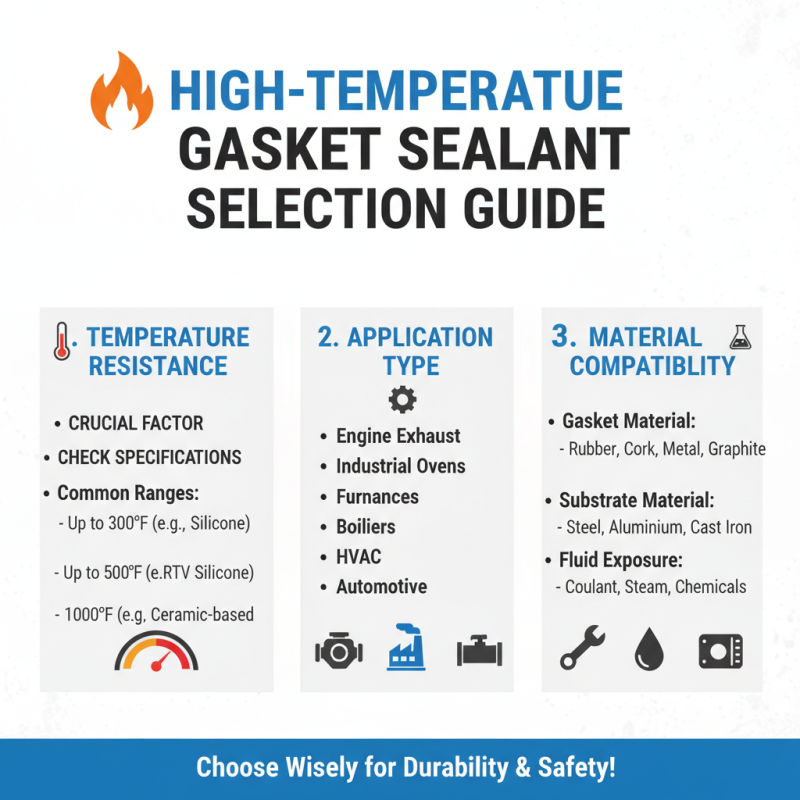
When selecting a high temp gasket sealant, understanding the types available is crucial. There are several categories, each tailored for specific conditions. Silicone-based sealants are among the most popular. They can withstand temperatures up to 500°F. Their flexibility makes them suitable for engines and exhaust systems. Yet, they may not bond well with certain surfaces. This can lead to leaks if not properly applied.
Another option is anaerobic sealants. They are ideal for metal gaskets. These sealants cure in the absence of air and can handle extreme temperatures, often reaching up to 300°F. This property makes them excellent for transmission and differential assemblies. However, users need to ensure surfaces are clean and free of oil. Otherwise, the sealant might fail.
Lastly, we have graphite and ceramic-based sealants. They excel in high heat and pressure environments, suitable for industrial applications. However, their application can be messy and requires accurate measurements. The need for precision can result in challenges during the installation, possibly leading to ineffective seals. Each type brings unique benefits but also demands careful consideration of their limitations.
Evaluation Criteria: Performance, Temperature Rating, and Compatibility
When selecting a high temp gasket sealant, three key factors come into play: performance, temperature rating, and compatibility. Performance refers to the sealant's ability to maintain a strong bond under extreme conditions. According to industry reports, sealants designed for high-temperature applications can withstand temperatures exceeding 500°F. It is crucial to ensure that the chosen product performs reliably in your specific application.
Temperature rating is another critical factor. Different sealants have varying temperature limitations. Many sealants claim to handle temperatures of 600°F or more, yet real-world conditions may challenge this claim. Research shows that sealants can degrade over time when exposed to heat cycles. Choosing a sealant with a proven record in hot environments can make a significant difference.
Compatibility with materials is often overlooked. Not every sealant works well with all substrates. For example, certain sealants may react negatively with specific metals or plastics. Evaluate whether the sealant will bond effectively without causing corrosion or deterioration. A mismatch could lead to costly repairs. Understanding these criteria ensures that your selection stands up to the rigors of high-temperature applications.
Performance Evaluation of High Temp Gasket Sealants
Installation Tips for Optimal Use of High Temp Gasket Sealants
Installing high-temperature gasket sealants can make a significant difference in your project's longevity. Start by ensuring the surfaces are clean and free of debris. Any contaminants can prevent a proper seal. Use a solvent to wipe down both surfaces. Make sure they are dry before applying the sealant.
When applying the sealant, use a consistent bead. Too much sealant can lead to oozing when you tighten the components. A thin, even line is usually ideal. Remember, it's important to allow the sealant to cure correctly. Follow the manufacturer’s advice on curing times.
Don’t rush the installation process. Take your time to inspect the setup. Every detail matters. If something doesn’t look right, it’s worth reevaluating. Over time, you may find areas for improvement. This can help enhance future projects. Always keep learning and adapting.