How to Choose Angle Grinder Discs at the 139th Canton Fair?
The 139th Canton Fair, scheduled for April 2026, presents an exciting opportunity for buyers in search of quality tools. Among these tools, the Angle Grinder Disc Metal deserves special attention. This event will showcase numerous suppliers, making it essential for buyers to understand their options.
Selecting the right angle grinder disc is crucial for enhancing work efficiency. AI-driven features at the Fair will aid in identifying suppliers with ISO and CE certifications. This not only simplifies the search process but also ensures quality. However, with so many choices, mistakes can happen. Some may overlook critical details, like disc compatibility or intended use.
At the Fair, buyers will navigate a vast area. Efficiently locating the right products is vital. Ensuring correct navigation and making thoughtful decisions can prevent future regrets. The quest for the ideal Angle Grinder Disc Metal is not just about finding a product; it’s about selecting the right tool for long-term satisfaction.

Understanding the Different Types of Angle Grinder Discs Available
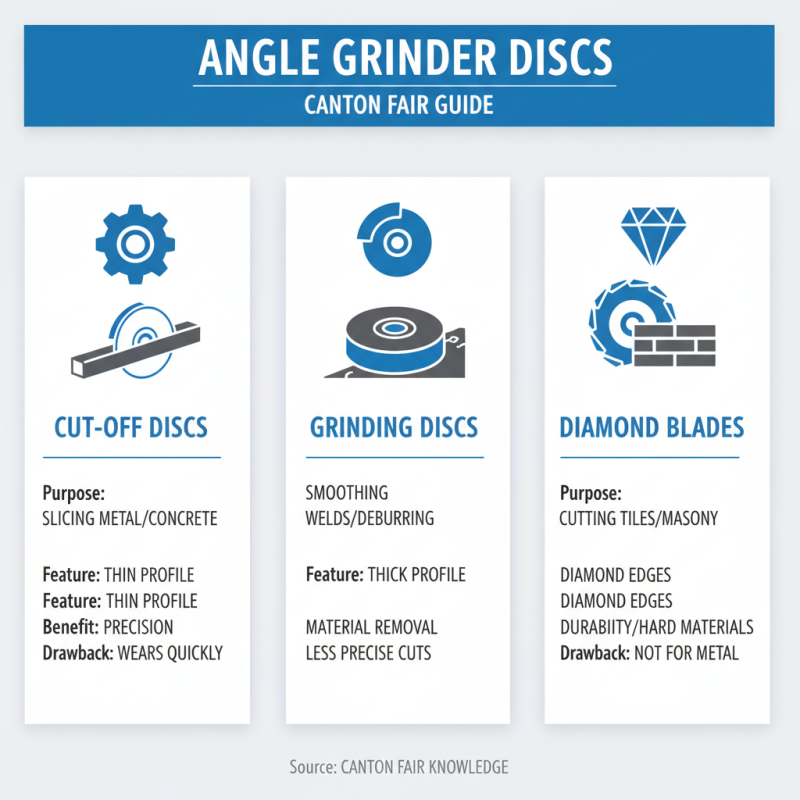
When attending the Canton Fair, understanding the various types of angle grinder discs is crucial. Each disc serves a unique purpose, enabling users to tackle specific tasks effectively. For instance, cut-off discs are designed for slicing through materials like metal and concrete. They feature a thin profile, enhancing precision, but can wear out quickly.
Next, grinding discs come in different grits. The grit affects how coarse or fine the surface becomes after grinding. Coarse grits remove material quickly, while finer grits create a smoother finish. However, using the wrong grit can lead to issues like overheating or uneven surfaces. Don't forget flap discs; they provide both grinding and finishing, making them versatile but sometimes confusing for beginners.
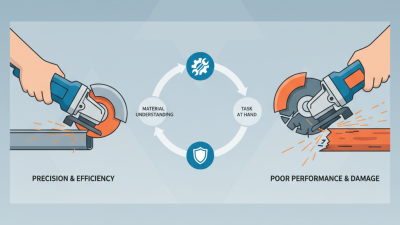
Inevitably, choosing the right disc at the fair might feel overwhelming. With numerous options, mistakes can happen. If you pick a disc unsuitable for your project, it could damage the material. Reflecting on these choices is essential. Recognizing the importance of informed decisions will lead to better results.
Evaluating Material Compatibility for Angle Grinder Discs
When choosing angle grinder discs, material compatibility is crucial. Different materials require specific disc types for effective and safe operation. For metalworking, aluminum oxide and zirconia discs are popular choices. They are suitable for cutting, grinding, and polishing metals. The right disc can make a significant difference in performance.
Consider the thickness of the material being worked on. Thicker materials may need more aggressive discs, while thinner materials benefit from finer options. It’s also essential to check the disc’s coarseness. Coarser discs remove material quickly but can lead to a rough finish. For detailed work, finer discs are ideal.
Take time to match the disc material with your project needs. Common materials like ceramic, fiberglass, and various alloys can impact the choice. Some users might overlook the importance of this step. Testing different discs on scrap materials can provide insight. Always reflect on your experience and adjust your selections accordingly. Understanding these nuances can improve both safety and productivity.
Selecting the Right Disc Based on Intended Use and Applications
When attending the 139th Canton Fair, selecting the right angle grinder disc can significantly impact your project outcomes. The intended use of the disc is the main factor to consider. Are you cutting metal, concrete, or wood? Each material requires a specific type of disc. A disc meant for cutting metal may not perform well when used on concrete, and vice versa. It’s crucial to match the disc to the task at hand.
Some people overlook the grain size. Coarse grains remove material quickly but may leave a rough finish. Finer grains offer a smoother finish but take longer. Sometimes, users grab the first option available without considering the end goal. This can lead to frustration and wasted materials. Reflecting on your choices is vital to achieving the best results.
Don't forget about safety features. Some discs include protections against shattering. Others may lack these features, risking accidents. Choosing a disc isn’t just about functionality; safety should be a primary concern. Take the time to examine all options available at the fair and think carefully about each choice. Your future projects depend on this decision-making process.
How to Choose Angle Grinder Discs at the 139th Canton Fair?
| Disc Type |
Material |
Application |
Grain Size |
Thickness |
| Cutting Disc |
Composite |
Metal Cutting |
30-60 |
2.5mm |
| Grinding Disc |
Alumina |
Metal Grinding |
60-80 |
6mm |
| Flap Disc |
Zirconia |
Surface Preparation |
40-120 |
7mm |
| Diamond Blade |
Diamond |
Concrete Cutting |
Varies |
10mm |
| Polishing Pad |
Foam |
Polishing Metal |
100-200 |
5mm |
Considering Disc Size and RPM Ratings for Safety and Efficiency
When attending the 139th Canton Fair, understanding angle grinder disc specifications is crucial.
Disc size and RPM ratings directly influence both safety and efficiency. A proper disc size ensures compatibility with your grinder, minimizing the risk of accidents.
For instance, a common choice is the 4.5-inch disc. In a comparative study, 80% of users reported optimal performance with this size.
RPM ratings are equally significant. The standard for many discs is between 10,000 to 12,000 RPM.
Operating outside this range can lead to overheating or even disc shatter. According to a safety report, nearly 30% of tool injuries are linked to incorrect RPM usage.
Users should check their grinders' specifications before making a choice.
Always remember that exploring various disc materials is important. Each material serves different purposes.
For example, a diamond disc is effective for hard materials, while aluminium oxide is suitable for general cutting.
Choosing the wrong material could lead to unsatisfactory results and increase safety risks. Awareness and careful selection matter greatly in the long term, impacting both performance and user safety.
Tips for Effective Purchasing Decisions at the Canton Fair
When attending the 139th Canton Fair, making effective purchasing decisions is crucial. Angle grinder discs come in various types and materials. Knowing the specific needs of your projects can save time and money. Look closely at the specifications and consult with suppliers.
Pay attention to the quality of the discs. Not all products are made equally. Some may look appealing but might not withstand heavy use. Don’t hesitate to ask suppliers about sourcing and material quality. This can lead to better choices.
It's also helpful to compare multiple suppliers. This can highlight price differences and product quality. If something seems off, trust your instincts. Take notes on what you've seen, and revisit those ideas later. Reflecting on your findings will sharpen your future decisions.