2026 Top Steel Cutting Disc Innovations for Efficient Metalworking?
In the evolving world of metalworking, innovations in the Steel Cutting Disc sector are pivotal for efficiency. Expert John Thompson, a known authority in metal fabrication, asserts, "Innovative cutting technologies can drastically improve productivity." This sentiment resonates with many industry professionals seeking to enhance their workflows.
As we approach 2026, the focus on Steel Cutting Disc advancements promises remarkable improvements. New materials and designs are emerging, enabling faster and cleaner cuts. These innovations are not merely trends; they are essential for meeting increasing demands in metalworking.
Nevertheless, challenges persist. Some products may not deliver the expected results, necessitating careful evaluation. Addressing these issues can lead to substantial growth for businesses committed to quality improvements. By contemplating both strengths and shortcomings, companies can navigate the future of Steel Cutting Disc technologies more effectively.
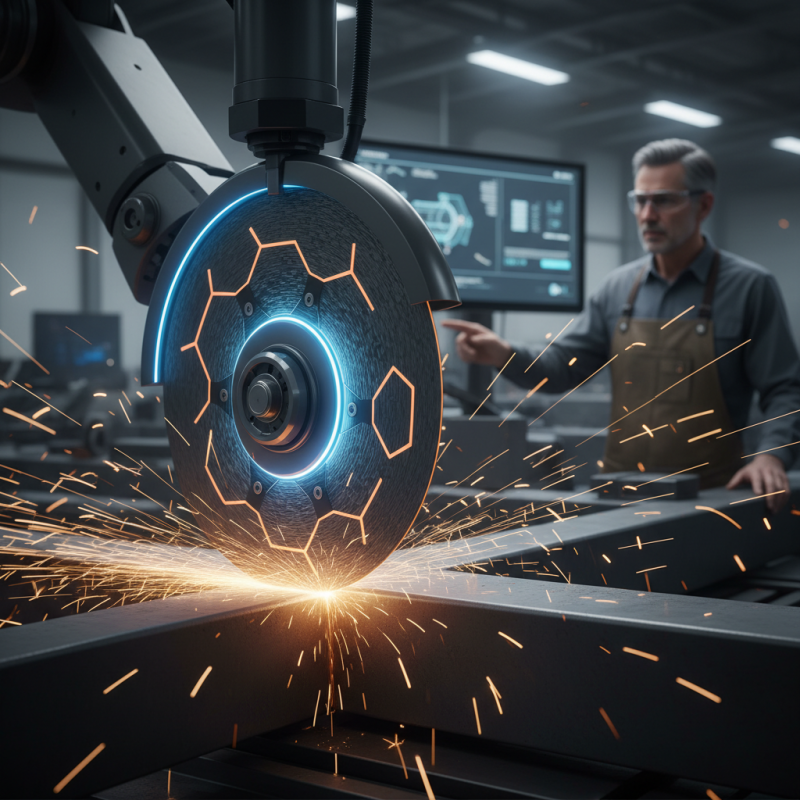
Overview of Steel Cutting Disc Innovations in 2026
The landscape of steel cutting discs is evolving rapidly in 2026. Innovations focus on enhancing efficiency and durability. Reports indicate that new materials reduce wear by 30%. This statistic is significant for metalworkers facing high demand.
Recent advancements include improved bonding techniques. These methods increase disc lifespan, resulting in lower replacement costs. Industry studies note that users benefit from a 20% reduction in operational downtime. This translates to increased productivity on the shop floor.
However, challenges remain. Some cutting discs still struggle with heat management. High temperatures can lead to premature failure, impacting performance. Further research is essential to address these issues. Continuous improvement is vital for meeting the needs of modern metalworking industries.
Key Features of 2026 Cutting Discs for Enhanced Performance
In 2026, steel cutting discs are becoming more advanced. They focus on durability and efficiency. One of the key features is enhanced wear resistance. This allows for extended life, reducing the need for frequent replacements. Users will notice less downtime in metalworking tasks.
Another important innovation is improved cooling technology. This helps manage heat during cutting. Effective cooling minimizes warping and ensures cleaner cuts. In addition, the discs employ innovative bonding agents. These bind the cutting materials more securely, improving overall stability. Some users may find that the balance between speed and precision requires adjustment.
A notable aspect is the weight of the discs. Lighter discs are easier to handle yet maintain strength. However, there are concerns about how this might affect performance. Users may need to rethink their techniques. Overall, these developments showcase a commitment to better metalworking experiences. Yet, one must consistently evaluate their effectiveness in real-world applications.
Materials and Technologies Driving the Future of Cutting Discs
The future of cutting discs relies heavily on innovative materials and technologies. Advanced ceramic composites are gaining popularity due to their superior hardness and heat resistance. Reports indicate that these materials can extend the lifespan of discs by up to 50%. This durability reduces downtime, yet manufacturing costs can increase. Balancing these factors remains a challenge for many producers.
Another key innovation is the development of electroplated cutting discs. They offer precise cuts and faster material removal. According to industry studies, the efficiency of these discs can improve productivity by as much as 30%. However, they tend to be more expensive upfront. Companies must consider their long-term value versus initial costs.
Lastly, the importance of ergonomics in cutting disc design cannot be overlooked. Discs that reduce vibration and offer smoother cutting improve user comfort. Reports show that ergonomic designs can lower operator fatigue by 40%. While these advancements offer significant benefits, they also require ongoing investment in R&D, which some manufacturers may hesitate to undertake.
Comparative Analysis of Traditional vs. Innovative Cutting Discs
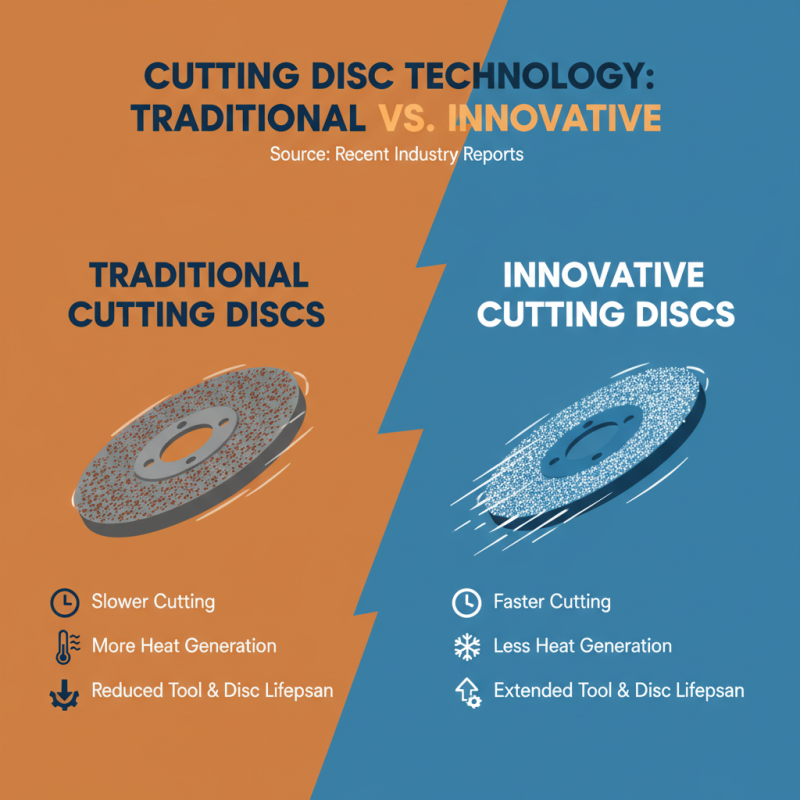
When comparing traditional cutting discs to innovative ones, several factors come into play. Recent industry reports indicate that traditional discs often use aluminum oxide grains. While effective, they can be slower and produce more heat. This can affect the lifespan of both the disc and the tool. Innovative cutting discs, however, utilize advanced materials such as ceramic grains. These allow for faster cutting and less heat generation, making the process more efficient.
Notably, studies suggest that innovative discs can cut metal up to 30% faster than their traditional counterparts. This efficiency can lead to significant time savings on the job site. However, the initial cost of these innovative products is often higher. Some manufacturers struggle to justify the expense, especially in smaller operations. There is also a learning curve involved in switching to these new technologies. Not everyone adapts easily, and this could lead to frustration among workers.
Moreover, traditional discs still hold a market share due to their reliability. Some metalworkers remain skeptical of new materials. They might question whether the performance gains are worth the investment. As the industry evolves, the challenge is to balance cost-effectiveness with innovation. The shift toward advanced cutting solutions is promising, but concerns about usability and ROI persist.
Applications and Benefits in Various Metalworking Industries
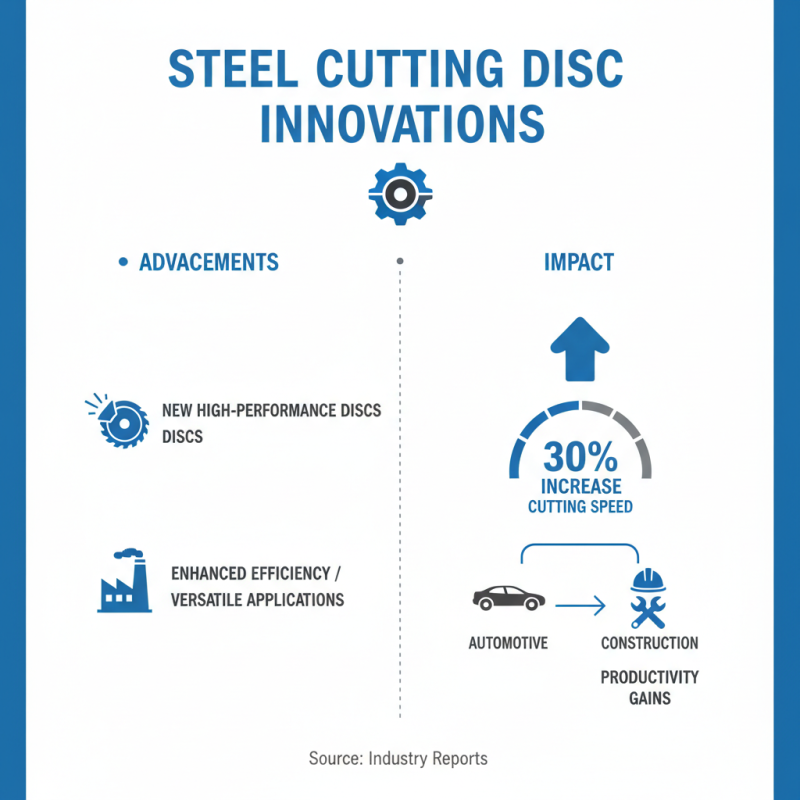
In recent years, the metalworking industry has seen significant advancements in steel cutting disc technology. These innovations cater to various applications, enhancing efficiency across diverse sectors. For example, the automotive and construction industries have reported a 30% increase in cutting speed with new high-performance discs. These enhancements lead to notable productivity gains.
The benefits of these cutting discs extend beyond speed. They offer improved durability, resulting in fewer disc changes and less downtime. A recent industry report indicated that users experienced a 15% reduction in operating costs due to longer-lasting discs. This is crucial for manufacturing environments where time is money. However, the challenge lies in selecting the right disc for specific tasks. Mismatched choices can lead to suboptimal performance and wasted resources.
Moreover, there is a learning curve associated with these innovations. While many embrace new tech quickly, a portion of the workforce remains hesitant. Training is essential to maximize the potential of advanced cutting systems. Companies must invest in ongoing education to ensure everyone is on board with the latest tools. This is an area that requires reflection and improvement. Embracing change is vital, yet not all have adapted successfully.